CN
EN

Product Center

start explore
GLOBAL TECHNOLOGY CHINESE SOLUTIONS
  • 01.ORIGINATING IN THE US, BRUSH SEAL TECHNOLOGY SERVES CRITICAL GLOBAL APPLICATIONS

    Energy

    Gas turbines, steam turbines
    (thermal power)

    Aviation

    Aircraft engines
    (Turbofan Engine& Turbojet Engine)

    Industrial & Marine

    Marine engines, industrial turbines

  • 02.PROTECTING HIGH-END EQUIPMENT WITH ADVANCED DYNAMIC SEALING TECHNOLOGY

    National Strategic Projects

    High-reliability sealing solutions for core power equipment

    Civil Applications

    Aircraft Engine, gas turbines, steam turbines, gearboxes,industrial compressors & blowers

STRUCTURAL CHARACTERISTICS
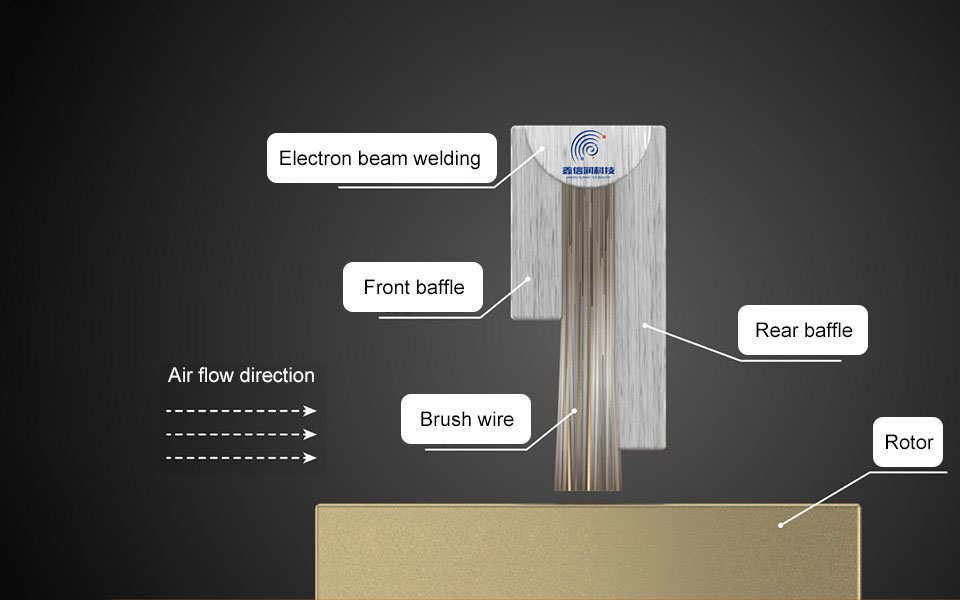
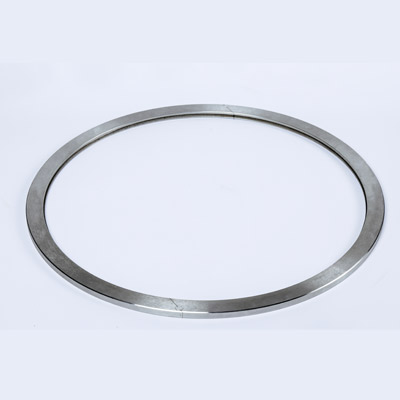
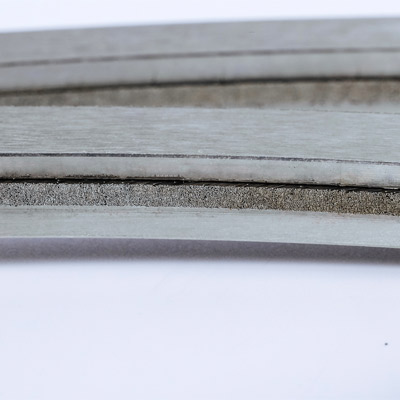
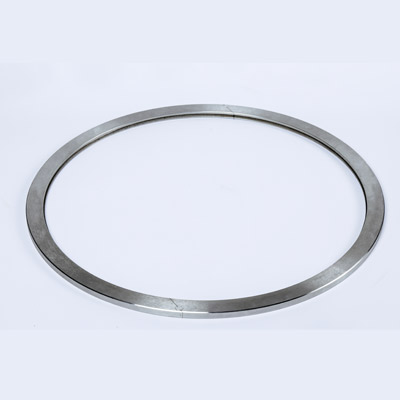
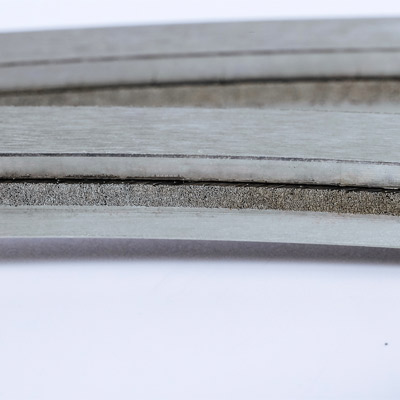
Comprising front/rear baffles with interlocked high-density superalloy brush filaments, angled at 30 °-60 ° along rotor rotation to enable flexible contact.
  • DYNAMIC CLEARANCE ADAPTATION

    Absorbs radialdisplacement forrapid sealing restoration
  • SELF-ADAPTIVE RESILIENCE

    Utilizes vibration/flow disturbances for automatic filament repositioning
  • CORE ADVANTAGE

    Maintains constant clearance with zero-permanent-deformation sealing
PARAMETER CONVENTIONAL DYNAMIC SEALS SUNRAY® BRUSH SEALS
Leakage High Only 10-15% of conventional seals
Secondary Flow Loss Significant Optimized
Durability Wear-prone failure High
Sunray® Brush Seals Sealing Technical Specifications
Temperature Resistance:>1100°C
Maximum Linear Velocity:>400m/s
Filament Diameter:0.06-0.22mm
Total Filament Pack Thickness:0.6-5mm
MATERIALS,PERFORMANCE
Technical indicators
  • Tolerance temperature
    >1100°C
  • Maximum linear velocity
    >400m/s
  • Brush wire diameter
    0.06-0.22mm
  • Total thickness of the brush wire
    0.6-5mm
MATERIALS,PERFORMANCE

Fundamental Requirements:

Excellent weld compatibility with filaments
Superior machinability,Post-heat.
treatment hardness:HRC 28-35(medium-low range)
Excellent welding performance and machinability. The hardness of the impeller material after heat treatment should be selected as medium or low hardness.

The choice of materials mainly depends on the operating temperature conditions.

High-temperature alloy materials Ferritic stainless steel Martensitic stainless steel Hastelloy alloy